The Assignment
A major road infrastructure project required an integrated digital project management framework to improve visibility and control across design, construction, schedule and cost.
The project covered a 17 km alignment with a capital cost of approximately $838 million. The objective was to establish a common digital environment that could connect project information with actual construction progress and provide stakeholders with a reliable, up-to-date view of project performance.
Our Approach
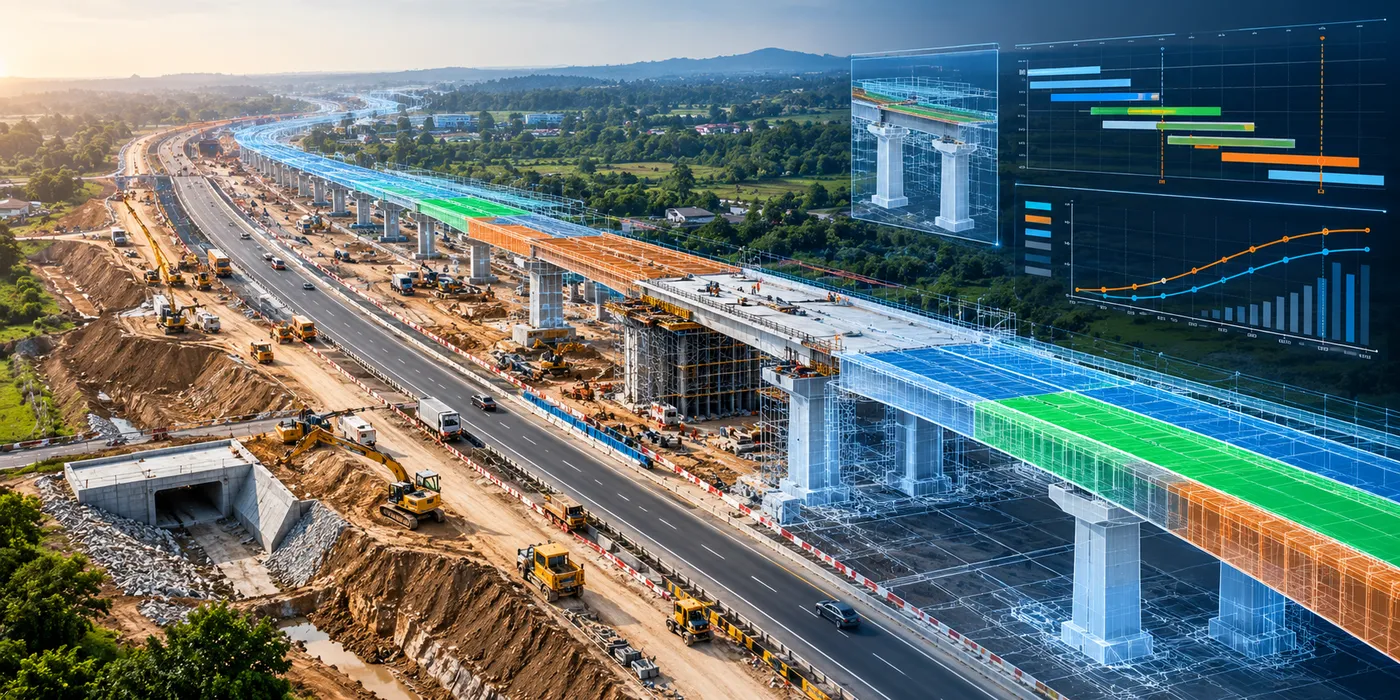
CS TECH Ai implemented a BIM-enabled Digital Project Management framework combining BIM, project management, UAV-based monitoring and schedule and cost information.
The engagement included:
- Implementation of a Digital Project Management Platform
- Establishment and support of a Project Management Office (PMO)
- UAV-based survey and monitoring of the project corridor
- Development of 3D models for roads and associated infrastructure assets
- Integration of design information across models and drawings
- Linking of the 3D model with construction activities for 4D project monitoring
- Integration of schedule and cost information through 5D BIM
- Plan-versus-actual construction progress monitoring
- Centralisation of project information to establish a single source of truth
- Digital monitoring of project performance to support timely project management decisions
The integrated approach connected physical progress from the project corridor with BIM models, schedule and cost information, enabling project teams to monitor construction within a coordinated digital environment.