The Assignment
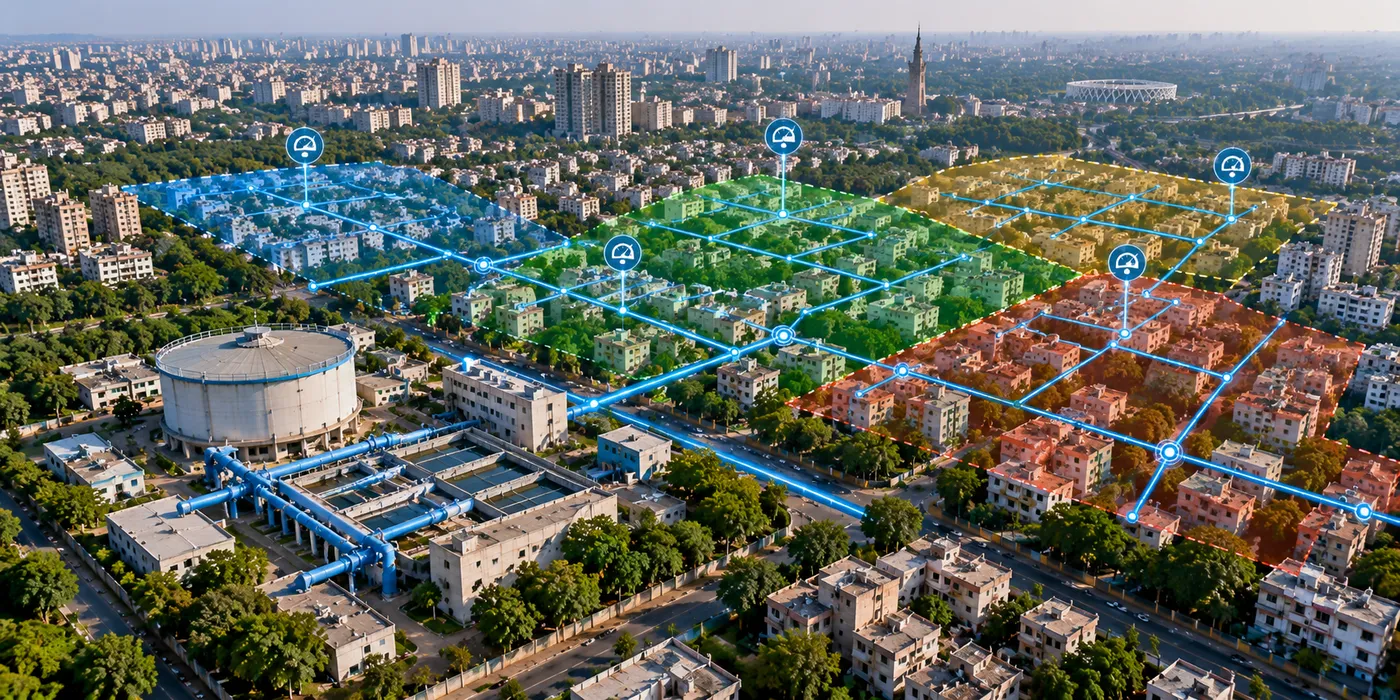
Delhi Jal Board required consultancy support to improve consumer service levels and address high Non-Revenue Water (NRW) within the command areas of primary Underground Reservoirs (UGRs) in Delhi.
The assignment involved hydraulic modelling and preparation of Detailed Project Reports (DPRs) for the creation of District Metered Areas (DMAs), providing a structured basis for improved monitoring, management and reduction of NRW across the water distribution system.
Our Approach
CS TECH Ai undertook GIS-based hydraulic modelling and network analysis to understand existing water distribution conditions and support the creation of hydraulically oriented DMAs.
The engagement included:
- Mapping pipeline networks on geo-coded maps with asset attributes and valve details
- Development of hydraulic models for the water distribution network
- Assessment of current, intermediate and ultimate-stage scenarios
- Network simulation and hydraulic analysis
- Assessment of ESR capacities and pipeline diameters
- Hydraulic delineation and establishment of DMAs
- Identification of Average Zonal Pressure (AZP) and Critical Pressure Points (CPP)
- Hydraulic model calibration
- Preparation of DPRs to support DMA creation and NRW reduction
The assignment covered two packages spanning approximately 580 sq. km, serving a population of approximately 7.2 million and 5.2 lakh consumers, with the water supply system comprising 4 WTPs and 2,850 tubewells.